Why is our box brown?
Because it’s the same box the automakers use. And that’s the best news a package can give you.
On a parts store shelf you’ll find boxes of every color: glossy cardboard, varnish, loud designs. Next to them, the OE Super box looks plain: brown cardboard, one white label. Some customers wonder why.
The answer is on the assembly line. When an automaker receives brake pads to install on new cars, they don’t arrive in luxury packaging: they arrive in the standard original equipment carton — sturdy, stackable, no wasted ink. That is exactly the box we use, because we supply original equipment programs.
When a carmaker buys from us, the only thing that changes is the label: ours comes off, theirs goes on. The box is the same. The pad inside is the same.
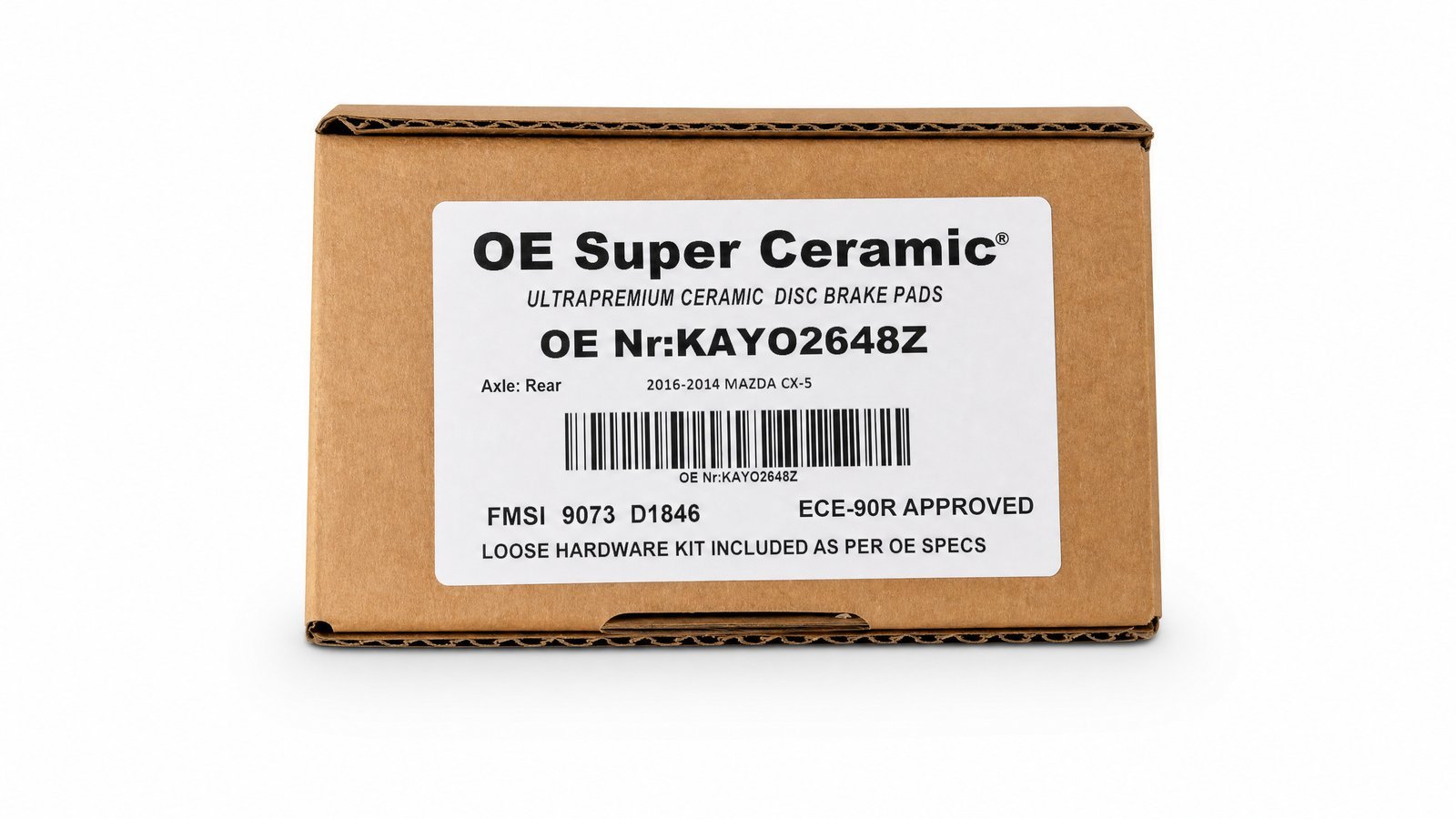
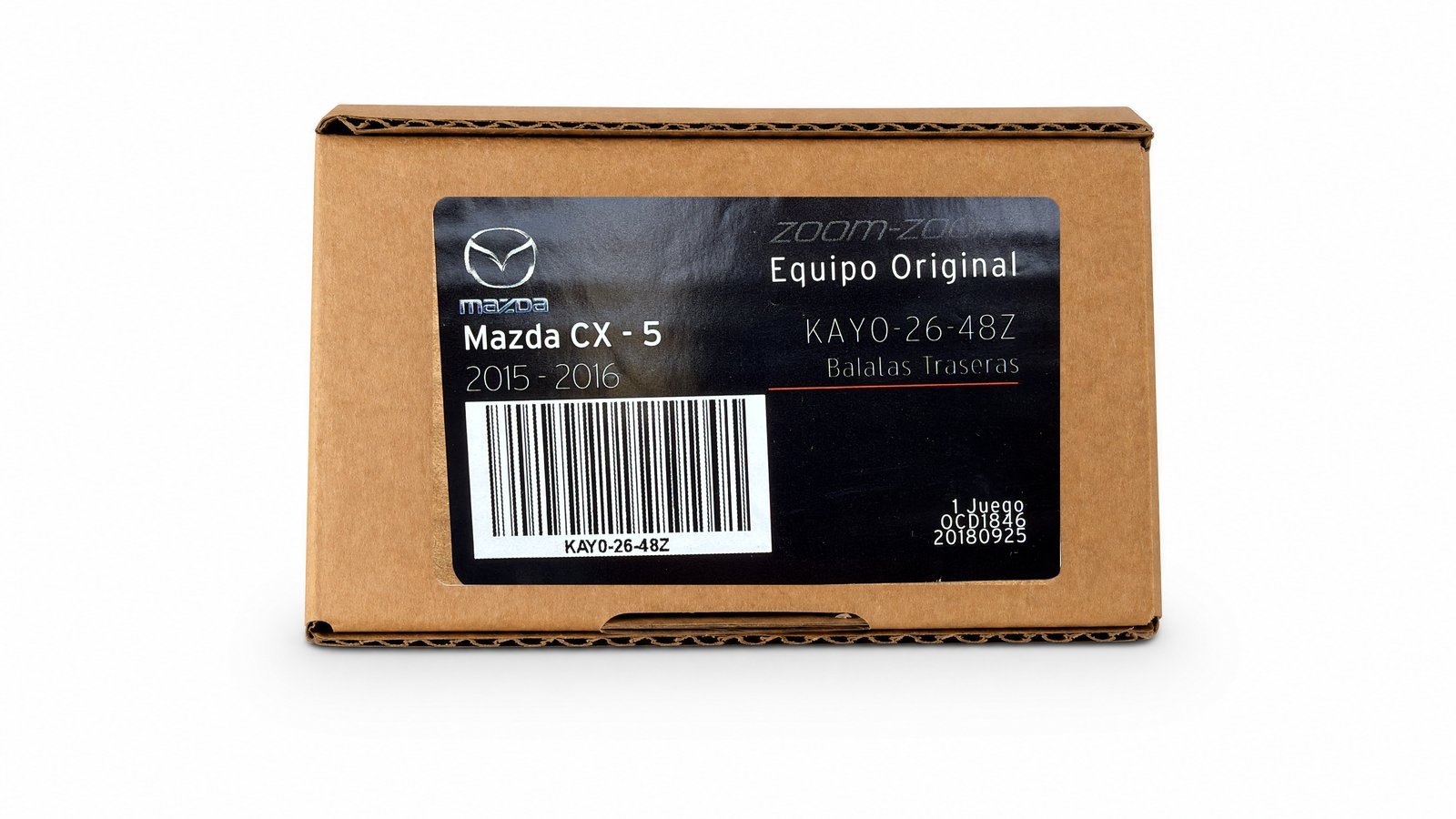
Drag the bar — or let your scroll do it. Both boxes in the photo contain exactly the same brake pad set for the 2015–2016 Mazda CX-5: one wears the automaker’s label, the other wears ours.
Packaging doesn’t brake. The pad does.
No makeup
Every peso other brands spend on inks, varnish and luxury cardboard, we spend where it matters: on the friction material, the shims and the hardware inside.
The assembly-line standard
The brown carton with a label is the format automakers receive their original equipment parts in at the plant. Seeing it on your counter means the product comes from that world.
Same part, two paths
The pad that goes to the automaker and the pad that reaches your parts store come off the same production line, under the same controls. Only the destination — and the label — change.
The box is the proof
Now you know how to read it. Learn what original equipment really means and meet the four lines that travel inside that box.
What is OE See the lines